Cracking the code: enhancing interpretability and accessibility of ophthalmic disorders detection using KAN
My role: First author. Built a 0.3M-parameter (about 1.2 MB) OCT classifier and its interpretability analysis, and proposed a new metric for comparing interpretability across models.
Method: Explores Kolmogorov–Arnold Networks for OCT classification, feature decomposition, and model accessibility.
Finding: Studies the tradeoff between compact network architectures and classification performance.
Scope: Exploratory research; clinical utility requires further validation.
Abstract
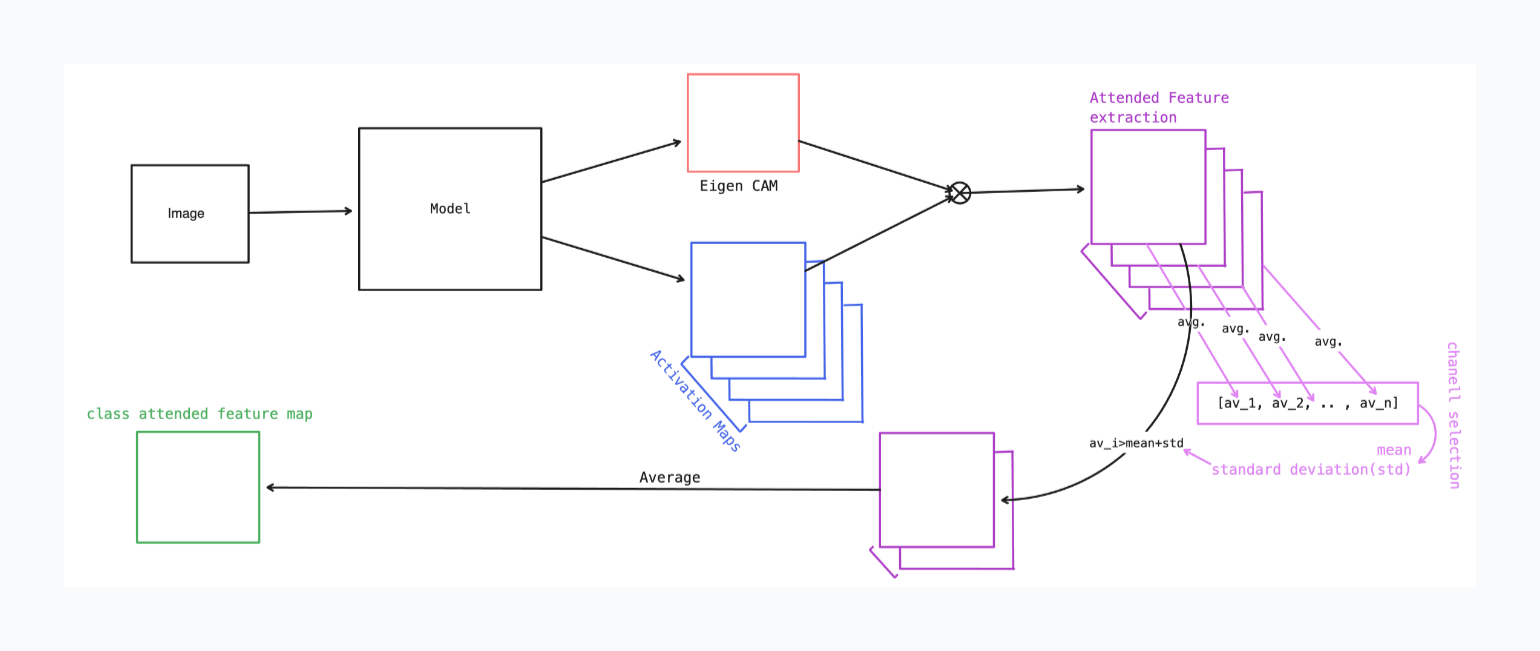
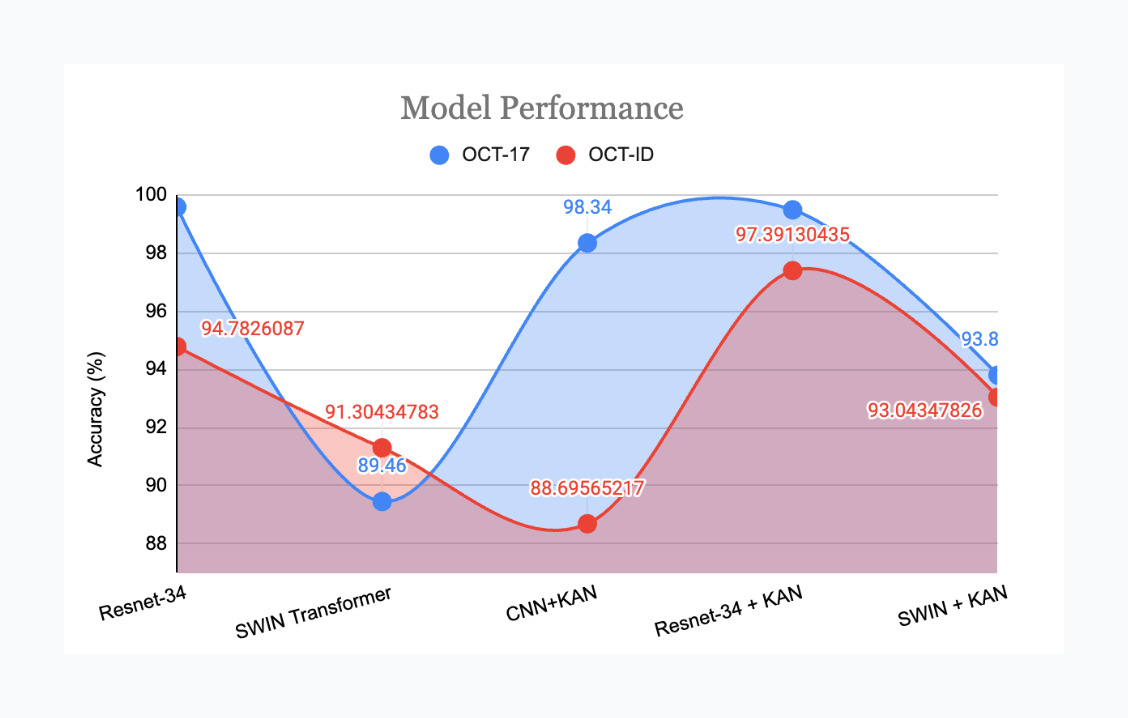
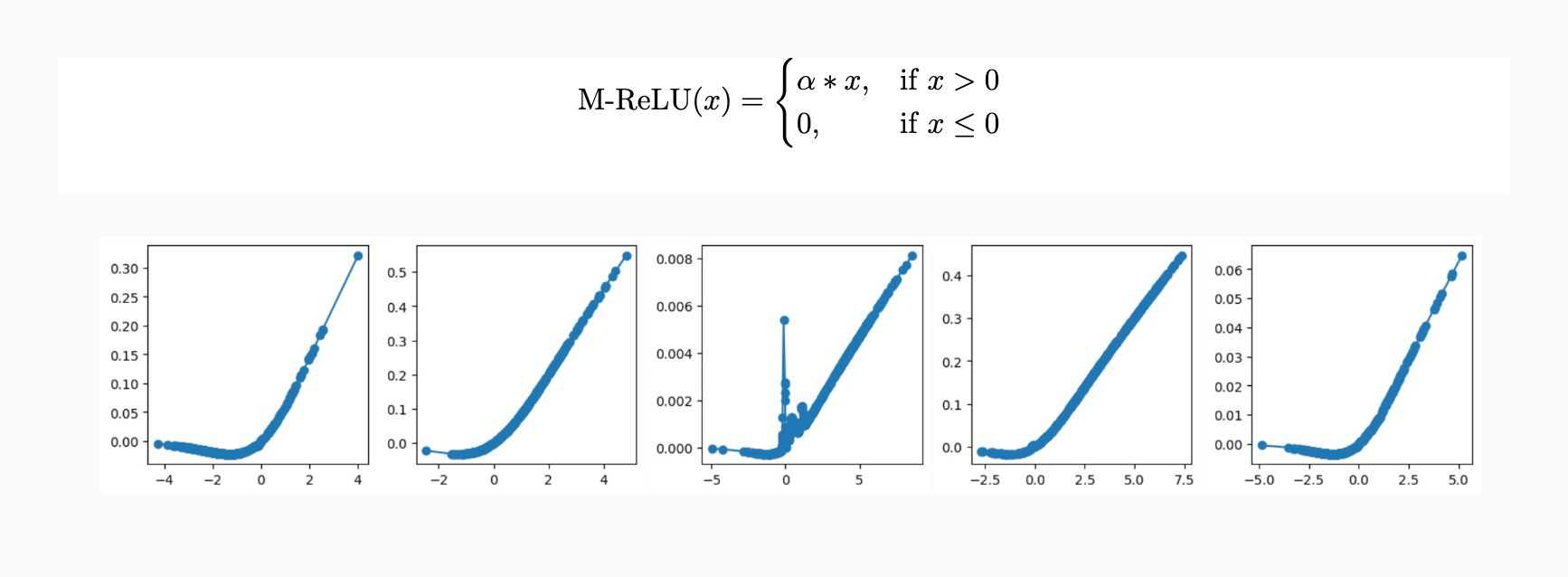
This study emphasizes the importance of interpretability and accessibility in deep learning models applied to ophthalmology, particularly in Optical Coherence Tomography (OCT) analysis. The “black box” nature of many deep learning models presents challenges for clinicians, who require transparent explanations for model decisions to build trust and ensure accountability. Kolmogorov-Arnold Networks (KANs) offer a promising solution by decomposing complex functions into simpler, interpretable components, making them more suitable for clinical settings. This study explores the application of KANs in OCT analysis, focusing on feature decomposition, rule extraction, and visualization to enhance interpretability. Preliminary results indicate that for models combining Convolutional Neural Networks (CNNs) with KANs, particularly those with smaller parameter counts, performance is comparable to larger, more complex models while remaining more accessible and interpretable. For instance, a CNN+KAN model with 0.3M parameters achieved a significant performance boost from 60% to 88.79% accuracy after pre-training on the MNIST dataset, using only 1.4% of the parameters of the best-performing ResNet-34 model. This highlights the potential of KANs in reducing model complexity without sacrificing performance, making them suitable for deployment in resource-limited environments. The study calls for further investigation into the balance between model complexity and interpretability, aiming to improve diagnostic methodologies and build trust in AI systems in ophthalmology.
Keywords
Visual Overview